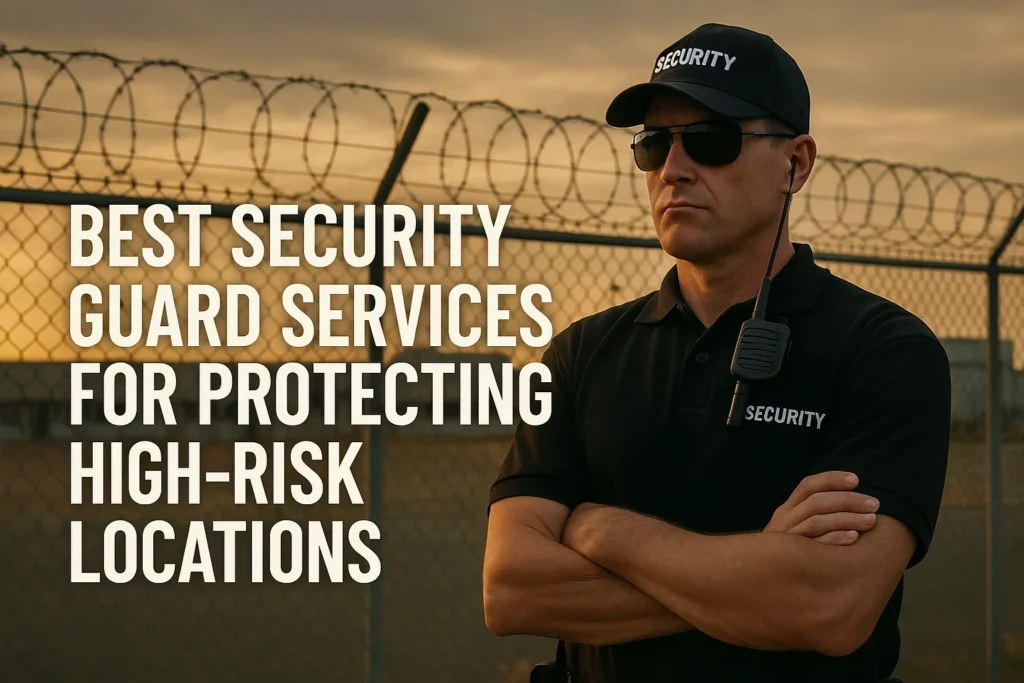
When it comes to safeguarding high-risk locations, generic security solutions simply don’t cut it. Whether you’re operating a government facility, critical infrastructure site, financial institution, or a high-profile commercial complex, these environments demand advanced protection, specialized training, and real-time response capabilities. That’s where elite security guard services play a vital role.
In this post, we’ll explore the top features of the best security guard services for high-risk environments and how they keep your assets, people, and reputation safe.
1. Understanding High-Risk Locations
High-risk sites are vulnerable to a wide range of threats including:
- Terrorist attacks
- Theft and sabotage
- Workplace violence
- Vandalism and arson
- Civil unrest or protest
- Data breaches or cyber-physical attacks
Such locations include:
- Airports and transit hubs
- Government buildings
- Financial institutions
- Power plants and utilities
- Hospitals and pharmaceutical facilities
- Luxury retail stores and jewelers
- Data centers and tech campuses
Protecting these requires a specialized security approach, not just a uniformed presence.
2. Trained and Certified Security Personnel
The best security guard services provide professionally trained and licensed personnel who go beyond basic patrol duties. Guards must be certified in:
- Emergency response and evacuation
- Access control systems
- Crowd management
- First aid and CPR
- De-escalation and non-lethal defense tactics
- Active shooter response
Many elite firms offer armed guards and ex-law enforcement or military personnel for the highest levels of security.
3. 24/7 Surveillance and Monitoring Integration
High-risk locations can’t afford downtime. Security services must offer round-the-clock coverage, backed by advanced surveillance technology.
Top-tier security includes:
- Real-time CCTV monitoring
- Motion detectors and sensors
- Facial recognition or biometric scanners
- AI-based threat detection systems
- Remote command centers
Combining physical guards with smart monitoring ensures a comprehensive, multi-layered defense.
4. Access Control and Perimeter Security
Securing entry and exit points is crucial for high-risk locations. Guards manage access in real-time, preventing unauthorized personnel or suspicious packages from entering the premises.
Duties include:
- Badge and ID verification
- Visitor logging
- Vehicle inspections
- Bag checks and metal detectors
- Lockdown protocols when needed
They act as both gatekeepers and first responders in emergencies.
5. Customized Security Protocols
No two high-risk sites are the same. The best security providers work with clients to create tailored security plans that address specific vulnerabilities, hours of operation, traffic flow, and industry regulations.
Services can be adapted to:
- Shift-based staffing
- Temporary heightened alerts (e.g., during elections or protests)
- Confidentiality requirements for sensitive operations
A custom strategy ensures efficiency and maximum coverage at all times.
6. Incident Response and Reporting
Top-tier security guards are trained to react instantly when a threat emerges. Their actions can mean the difference between a minor disruption and a catastrophic loss.
Response capabilities include:
- Immediate threat neutralization
- Coordinating with law enforcement or emergency services
- Lockdown execution
- Medical response and triage
- Crisis communication with stakeholders
Afterward, guards provide detailed incident reports, supporting investigations, insurance claims, or legal action.
7. Visible Deterrence and Covert Protection
For some sites, visible security is crucial to deter criminal behavior. In others, a low-profile or plainclothes approach is more effective. The best services offer both:
- Uniformed guards for public deterrence
- Undercover personnel to detect insider threats
- Mobile patrols for unpredictable coverage
- Tactical teams for high-alert situations
This dual-layer approach helps cover all threat angles.
8. Compliance and Risk Management
High-risk industries often have strict compliance requirements—especially in healthcare, finance, and energy sectors. Professional security firms ensure your facility is:
- Compliant with OSHA, HIPAA, or FERC standards
- Aligned with federal and state security regulations
- Documenting and tracking risk exposure
They don’t just protect people—they help you maintain legal and operational safety.
9. Proven Track Record and Reputation
When evaluating security guard services, choose providers with:
- A strong history in high-risk environments
- Positive client testimonials and references
- Insurance coverage and liability protection
- Ongoing guard training and upskilling
- Background checks for all personnel
Firms like Security SCG are trusted across the U.S. for delivering elite protection for high-risk facilities. We offer custom plans, rapid deployment, and fully trained teams ready to protect what matters most.
Conclusion
Protecting high-risk locations requires more than locks and cameras—it demands proactive human intelligence, strategic planning, and immediate response capabilities. Professional security guard services act as the first line of defense against physical threats, unauthorized access, and operational disruption.
If you’re managing a vulnerable site, don’t leave it to chance. Contact Security SCG today to build a high-impact security plan tailored to your risk level and industry.